

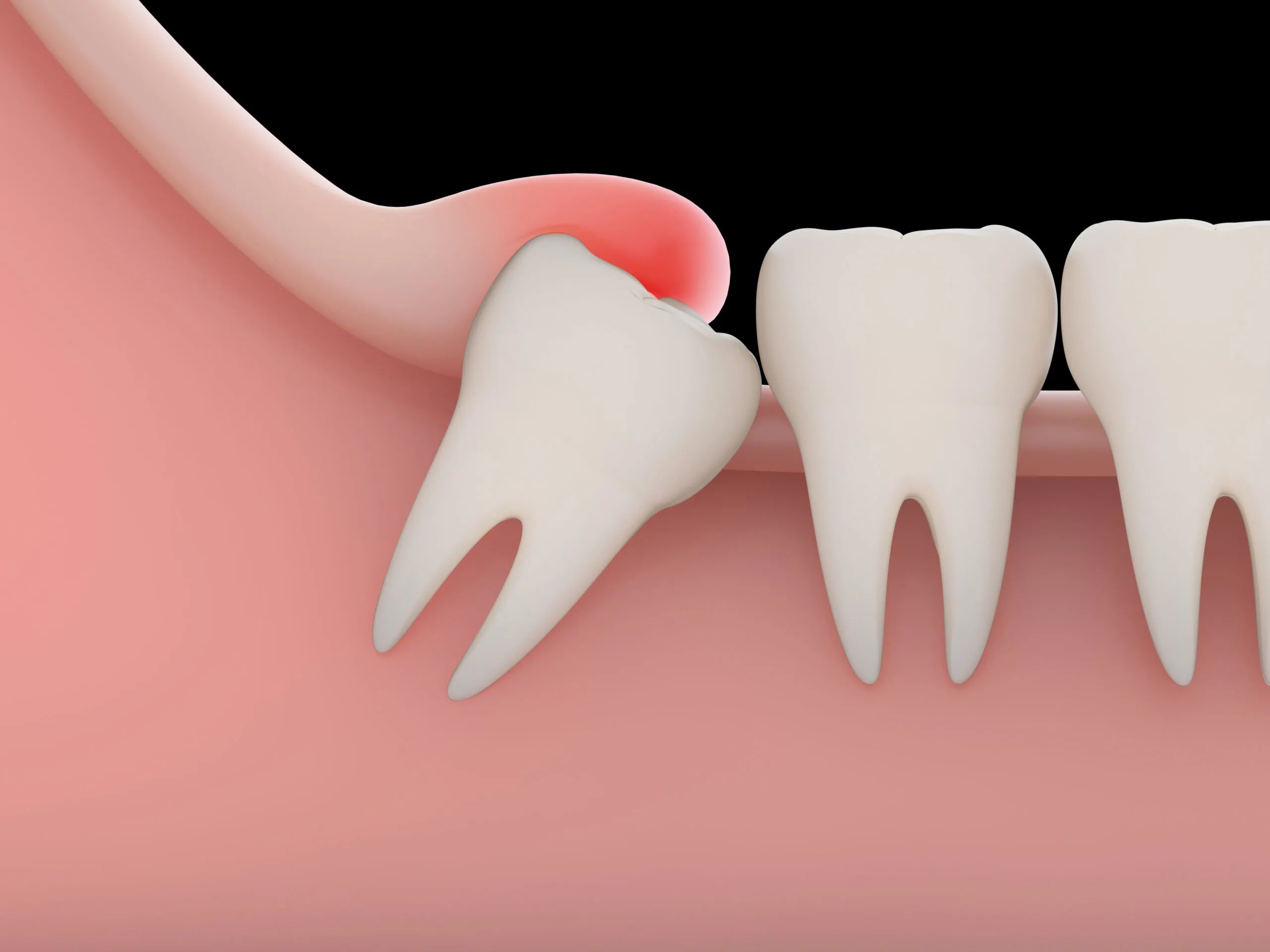
Pain at the very back of the mouth is easy to dismiss at first. It might feel like food caught between teeth or a tender patch of gum. Yet when that discomfort sits around a partially erupted wisdom tooth, it often points to a condition known as pericoronitis.
Pericoronitis refers to inflammation and infection of the gum tissue surrounding a wisdom tooth that has not fully emerged. While it is common in late adolescence and early adulthood, it can affect anyone whose wisdom teeth remain partly covered by gum. Understanding why it develops and how it is treated can help you act early and avoid unnecessary complications.
Why Pericoronitis Develops
Wisdom teeth are the last molars to erupt. By the time they attempt to come through, the jaw may not have enough space. As a result, the tooth may emerge at an angle or only partially break through the gum.
When this happens, a small flap of gum tissue can remain over part of the tooth. Dentists refer to this as an operculum. The space beneath it easily traps food debris and bacteria. Brushing that area thoroughly is difficult, even for people with excellent oral hygiene habits.
Bacteria multiply in that pocket, and the gum becomes swollen and inflamed. If not managed, the inflammation can progress to infection. Lower wisdom teeth are more commonly involved because gravity and limited access make cleaning harder.
Recognising the Symptoms
The early signs are usually localised. You may notice:
- Tenderness or throbbing pain at the back of the jaw
- Swollen, red gum tissue around a partially erupted tooth
- Bleeding when brushing
- A bad taste or unpleasant breath
As the inflammation worsens, other symptoms can develop. Some people experience jaw stiffness or difficulty opening their mouth fully. Swelling may extend into the cheek. In more severe cases, fever or swollen lymph nodes under the jaw can occur.
If swelling spreads to the face or neck, or swallowing becomes difficult, urgent dental or medical attention is required. Although uncommon, untreated infection can spread beyond the immediate gum tissue.
Short-Term Relief at Home
Home care can reduce discomfort while waiting for a dental appointment. Warm saltwater rinses help soothe irritated tissue and flush out trapped debris. Gentle brushing around the affected tooth is still important, even if the area feels tender. A soft toothbrush with a small head often improves access.
Over-the-counter anti-inflammatory pain relief may ease symptoms, provided it is appropriate for you. A pharmacist can offer guidance.
These steps manage symptoms; they do not remove the underlying cause. When pericoronitis recurs, professional treatment becomes necessary.
Professional Treatment Options
A dentist will examine the area and may take an X-ray to assess the position of the wisdom tooth and surrounding structures. The initial focus is usually thorough cleaning. Irrigation beneath the gum flap removes accumulated debris and bacteria.
If infection shows signs of spreading or systemic symptoms are present, antibiotics may be prescribed. They are not required in every case, and responsible prescribing is now emphasised in Australian dental practice.
For some patients, trimming the gum flap may provide temporary relief. Yet if the tooth’s position continues to trap food and bacteria, inflammation often returns. At that point, removal of the wisdom tooth becomes the more predictable solution.
When Extraction Is Recommended?
Repeated episodes of pericoronitis suggest that the tooth’s position is unlikely to improve. In such cases, extraction prevents further infection and protects neighbouring teeth from decay or gum disease.
Patients considering Wisdom teeth removal Melbourne services are often doing so after experiencing recurring pain or swelling. Removal eliminates the pocket where bacteria accumulate and typically resolves the issue permanently.
The timing of removal matters. Performing the procedure when the infection is controlled reduces the risk of complications and improves recovery.
Understanding Costs and Practical Considerations
Financial questions frequently arise once extraction is discussed. Searches for Wisdom teeth removal cost Melbourne reflect the reality that fees vary depending on complexity, imaging, and whether sedation or general anaesthesia is used.
Some patients also compare the Wisdom teeth removal price Melbourne across different clinics. While comparing quotes is sensible, it is equally important to consider the clinician’s experience, facilities, and post-operative support.
Online queries such as wisdom teeth removal Melbourne cost often reveal a broad range of figures. Impacted teeth requiring surgical removal generally cost more than straightforward extractions performed under local anaesthetic.
There’s nothing wrong in looking for affordable wisdom teeth removal in Melbourne but, affordability should be balanced with clinical standards and transparent fee structures. Many practices offer cheap wisdom teeth removal Melbourne by offering payment plans with little or no interest. Look for such clinics and ensure to get detailed quotes from them.
A written treatment plan outlining inclusions, possible additional fees, and follow-up care helps avoid misunderstandings.
Preventing Future Problems
Not all partially erupted wisdom teeth lead to infection. Consistent oral hygiene reduces risk. Direct the toothbrush towards the gum line behind the last molar and consider using an antimicrobial mouth rinse for short periods if recommended by a dental professional.
Regular dental examinations allow early identification of problematic wisdom teeth. X-rays can reveal impaction before symptoms arise, giving patients time to plan rather than react to sudden pain.
A Measured Approach to Care
Pericoronitis is uncomfortable but manageable. Early symptoms often respond well to cleaning and supportive care. Persistent or recurring episodes usually signal that the wisdom tooth itself is the underlying issue.
Prompt assessment, sensible home care, and informed decisions about extraction reduce the likelihood of complications. For many people, addressing the problem decisively brings lasting relief and restores comfort at the back of the mouth.